
Is IPTV Legal in the United States? The Ultimate Guide for Cord-Cutters
We all love entertainment. The way we watch television has changed drastically over the last decade. Gone are the days when you had to wait for a specific time to watch your favorite show or deal with messy cables running all over your living room. Today, Internet Protocol Television, or IPTV, has taken center stage.
SUBSCRIBE NOW
But with the rise of this technology, a massive cloud of confusion has formed. You might have seen ads for “thousands of channels” for a few dollars a month, or perhaps you use a well-known app like Hulu. Both are IPTV, but they are worlds apart legally.
This brings us to the most important question for American viewers: Is IPTV legal in the United States?
The short answer is yes, IPTV technology itself is 100% legal. However, the way you use it and the specific service you subscribe to determines if you are breaking the law. It is a gray area for many, but the distinction is actually quite black and white when you know what to look for.
In this comprehensive guide, we will break down everything you need to know. We will explore the legal landscape, help you spot the difference between legitimate services and piracy, and explain the real risks involved in using unverified streams.
What Is IPTV and How Does It Actually Work?
Before we dive into the legal complexities, we need to understand what we are talking about. IPTV stands for Internet Protocol Television. Unlike traditional cable or satellite TV that uses light pulses in fiber-optic cables or radio waves from satellites, IPTV delivers television content over the internet.
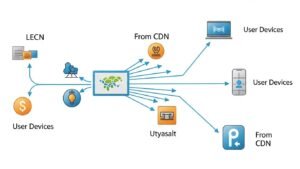
Think of it like browsing a website. When you click a link, your computer requests data from a server, and the server sends it back to you. IPTV works the same way. When you select a movie or a live channel, your device requests the video file from a server, and it streams to your TV instantly.
This technology is fantastic. It allows for:
- Video on Demand (VOD): Watch what you want, when you want.
- Time-shifted Media: Rewind or restart live TV.
- Live IPTV: Watch live events and sports as they happen.
Because the technology is just a delivery method, the technology itself cannot be illegal. It is just a tool. Asking “Is IPTV legal?” is like asking “Is the internet legal?” The answer depends entirely on what you do with it.
The Big Question: Is IPTV Legal in the United States?
Let’s address the main keyword directly: Is IPTV legal in the United States?
Yes. Using IPTV services to watch content is legal in the US, provided that the service provider holds the appropriate licenses for the content they are showing you.
Copyright laws in the United States are strict. Content creators (like movie studios, sports leagues, and TV networks) own the rights to their work. They sell these rights to broadcasters. If an IPTV provider buys these rights, they are a “Verified” or legal service. If they stream the content without buying the rights, they are an “Unverified” or illegal service.
SUBSCRIBE NOW
The Protecting Lawful Streaming Act of 2020
Recently, the US government tightened the rules. In late 2020, the Protecting Lawful Streaming Act was passed. This law specifically targets the operators of illegal commercial streaming services.
While this law focuses heavily on the people selling the illegal streams (turning it into a felony in some cases), it highlights how serious the US government is about cracking down on digital piracy. As a user, you are less likely to face jail time than a seller, but you are not immune to legal trouble or ISP penalties.
Legal vs. Illegal IPTV: What is the Difference?
Distinguishing between the two can sometimes be tricky for the average user. Illegal services often have professional-looking websites and slick interfaces. However, there are fundamental differences in how they operate.
1. Verified (Legal) IPTV Services
These are big companies you likely know. They follow the rules, pay their taxes, and most importantly, pay the content creators. They are available on official app stores like the Apple App Store, Google Play Store, and Amazon App Store.
Examples include:
- Hulu + Live TV
- YouTube TV
- Sling TV
- Pluto TV (Free and legal)
- Disney+
2. Unverified (Illegal) IPTV Services
These services operate in the shadows. They capture streams from legal sources and rebroadcast them over the internet for a fraction of the cost. They do not pay for the content. Because they don’t have overhead costs for licensing, they can charge incredibly low prices.
These apps are usually not found on official app stores. You often have to “sideload” them onto your device using special downloader tools.
Comparison: Legal vs. Illegal IPTV
Here is a quick way to compare the two so you can make safe choices.
| Feature | Legal IPTV Services | Illegal IPTV Services |
|---|---|---|
| Content Licensing | Fully Licensed & Paid | No Licenses (Stolen content) |
| Availability | Official App Stores | Sideloading / Third-party sites |
| Reliability | High (No buffering) | Low (Frequent buffering/shutdowns) |
| Cost | Market Rate ($25 – $70+) | Very Low ($5 – $15) |
| Customer Support | Official Support Teams | Non-existent or anonymous chat |
| Legal Risk | Zero | Moderate to High |
Just because a service charges you a monthly fee does not make it legal. Many illegal IPTV providers charge a subscription fee to make themselves look legitimate. Paying for a service does not equal legality if the provider is stealing the content.
How to Spot an Illegal IPTV Service
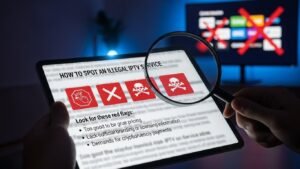
You don’t want to accidentally support organized crime or expose your home network to risks. Knowing how to spot a “too good to be true” deal is essential. If you are asking yourself “Is IPTV legal in the United States regarding this specific app?”, check for these red flags.
SUBSCRIBE NOW
1. The Price is Unrealistic
If a service offers 5,000 channels, including premium movie channels (HBO, Showtime) and sports packages (NFL Sunday Ticket, NBA League Pass) for only $10 a month, it is illegal. These packages cost legitimate providers hundreds of dollars to license. Math simply doesn’t add up.
2. Missing Contact Information
Legal companies want you to contact them. They have physical addresses, phone numbers, and clear “About Us” pages. Illegal services often hide their identity. If the only way to contact them is an encrypted messaging app or a generic email form, be suspicious.
3. Crypto-Only Payments
While cryptocurrency is becoming more mainstream, legitimate businesses also accept credit cards and PayPal. If a provider only accepts Bitcoin or other cryptocurrencies, it is likely because they want to avoid being tracked by authorities and banks.
4. “Sideloading” is Required
Google, Amazon, and Apple have strict verification processes. They do not allow piracy apps on their stores. If the service asks you to “jailbreak” your device or download an APK file from a random website, you are likely installing illegal software.
“When you use an unverified IPTV service, you aren’t just watching TV. You are opening a digital door to unknown entities who do not follow privacy laws or security standards.”
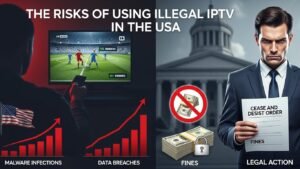
The Risks of Using Illegal IPTV in the USA
Some users might think, “Who cares? I’m saving money.” But the question “Is IPTV legal in the United States?” isn’t just about following rules; it’s about protecting yourself. The risks go far beyond a letter from a lawyer.
SUBSCRIBE NOW
Legal Consequences
While the US government primarily targets the sellers, users are not invisible. Copyright trolls (law firms hired by studios) track IP addresses of people streaming illegal content. You could receive:
- DMCA Notices: Warnings from your Internet Service Provider (ISP).
- Service Termination: Your ISP might shut off your internet.
- Settlement Demands: Letters demanding cash payments to avoid a lawsuit.
Data Privacy and Security
This is the most immediate danger. Illegal IPTV apps are often filled with malware. Since they are not vetted by Google or Apple, the developers can hide malicious code inside the app.
This code can steal your passwords, access your banking info, or use your device as part of a “botnet” for cyberattacks. Furthermore, when you pay for these services with a credit card, you are handing your financial details to criminals.
Poor User Experience
Illegal services have no service level agreements. They can (and do) shut down overnight. If authorities raid the server, your screen goes black, and your money is gone. There are no refunds in the black market. Buffering is also a common complaint, especially during high-demand events like the Super Bowl.
Do You Need a VPN for IPTV?
The topic of Virtual Private Networks (VPNs) often comes up when discussing IPTV. A VPN encrypts your internet connection and hides your online activity from your ISP.
For Legal Services
If you are using services like Hulu or YouTube TV, you generally do not need a VPN for legality. However, people use them to protect their privacy or to access their home content while traveling abroad (bypassing geo-restrictions).
For Unverified Services
Users of illegal services almost always use VPNs to hide their IP addresses from their ISP and copyright agencies. While this effectively masks their activity, it does not make the act legal.
We do not condone copyright infringement. Using a VPN to hide illegal activities violates the terms of service of most VPN providers and is ethically wrong. We recommend using a VPN strictly for privacy and security on the open web.
Frequently Asked Questions (FAQ)
Is it illegal to watch IPTV in the USA?
Watching IPTV is legal if you use a legitimate provider. It becomes illegal if you stream copyrighted content through an unlicensed service.
Can I go to jail for using illegal IPTV?
It is highly unlikely for a casual viewer to go to jail in the US. The “Protecting Lawful Streaming Act” targets operators/sellers. However, you can face civil lawsuits, fines, or internet disconnection.
Are IPTV boxes legal?
Yes, the boxes themselves (like NVIDIA Shield, Amazon Fire Stick, Android TV boxes) are perfectly legal hardware. They only become tools for piracy if you install illegal software on them.
How can I watch TV for free legally?
There are many legal free options supported by ads. Services like Pluto TV, Tubi, Peacock (free tier), and The Roku Channel offer thousands of movies and TV shows legally for free.
SUBSCRIBE NOW
Conclusion
So, is IPTV legal in the United States? The answer is a resounding yes—but with conditions. IPTV is the future of television, offering convenience and variety that cable can’t match. However, the market is flooded with illegal providers looking to make a quick buck off copyrighted material.
Navigating this landscape requires a bit of caution. Stick to verified services found on official app stores. Not only will you keep yourself on the right side of the law, but you will also enjoy a stable, high-quality viewing experience without worrying about malware or sudden shutdowns.
If a deal looks too good to be true, it almost certainly is. Protect your data, respect content creators, and enjoy streaming safely.