
Is IPTV Legal in 2025? Legality of IPTV Around the World
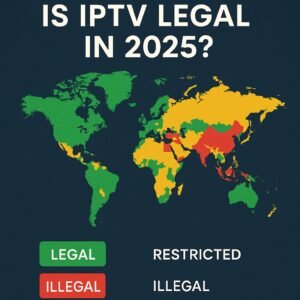
Internet Protocol Television (IPTV) has completely changed how people access and enjoy entertainment. Instead of relying on satellite or cable transmission, IPTV delivers content through internet networks. But as its popularity grows, one big question remains — is IPTV legal?
In 2025, the legality of IPTV depends mainly on the source of the content and the licensing rights behind it. IPTV itself — as a technology — is perfectly legal. It’s simply a method of delivering television signals over IP networks. What becomes illegal is accessing or distributing copyrighted content without authorization.
Legal IPTV vs. Illegal IPTV
-
Legal IPTV services operate with proper broadcasting rights. They pay licensing fees to content creators and distributors (sports leagues, movie studios, or television networks).
-
Illegal IPTV services rebroadcast channels or movies without permission, often at a fraction of the official subscription price.
Governments and copyright organizations worldwide are tightening regulations. Many ISPs now cooperate with media authorities to identify and block unauthorized IPTV streams. The European Union, for example, has increased penalties for digital piracy under its Digital Services Act (DSA). In the United States, the Digital Millennium Copyright Act (DMCA) continues to serve as the legal framework against illegal content distribution.
How Authorities Define IPTV Legality
Authorities classify IPTV legality using two main principles:
-
Licensing ownership — whether the service owns the rights to the content.
-
Distribution method — whether the content is shared or streamed without permission.
When you subscribe to a licensed IPTV provider, you are on the safe side of the law. But using an unverified provider — even unknowingly — can expose users to legal and cybersecurity risks, including malware and data theft.
In short, IPTV as a service delivery model is legal, but what matters is where the content comes from. Always look for transparency, licensing proof, and company registration to ensure your subscription is legitimate.
Countries Where IPTV Is Legal
The legality of IPTV varies globally. Some regions have clearly defined laws supporting IPTV providers that hold valid licenses, while others maintain stricter stances against unauthorized services. Let’s explore how IPTV legality is treated in key markets around the world in 2025.
1. United States
In the U.S., IPTV is legal as long as the provider respects copyright laws. Services like Hulu + Live TV, YouTube TV, and Sling TV operate under legitimate broadcast agreements. However, using “free IPTV” websites or resellers that stream pirated channels is considered illegal.
Under the Protecting Lawful Streaming Act, it’s now a felony to knowingly operate or assist in illegal streaming businesses.
2. United Kingdom
The UK’s Intellectual Property Office (IPO) and Ofcom classify unauthorized IPTV services as copyright infringements. Users who knowingly stream illegal content can face fines or prosecution. Yet, licensed IPTV platforms such as Sky Go, BBC iPlayer, or NOW TV are fully legal.
In 2025, new digital monitoring systems make it easier for UK authorities to trace unlicensed IPTV traffic.
3. European Union
The EU has a unified stance: IPTV is legal only when the provider has the content rights. The EU Copyright Directive (Article 17) emphasizes responsibility for platforms to prevent illegal distribution. Countries like France, Spain, and Germany frequently cooperate to block illegal IPTV domains through coordinated cyber operations.
4. Canada and Australia
Both Canada and Australia permit IPTV streaming when sourced from authorized broadcasters. Regulatory bodies such as ACMA (Australia) and CRTC (Canada) require IPTV providers to hold broadcasting licenses. Illegal streaming networks often face domain seizures or ISP blocks.
5. Middle East and North Africa
In regions like the UAE, Saudi Arabia, and Morocco, IPTV services are legal only with government approval. Unauthorized rebroadcasting of sports or international channels leads to strict penalties. Legal IPTV platforms must operate under local media laws and censorship regulations.
6. Asia-Pacific
Countries such as Japan, South Korea, and Singapore encourage legal IPTV operations. Telecom companies often provide bundled IPTV services as part of internet subscriptions. However, China’s media regulations restrict foreign IPTV platforms without state approval.
Summary Table Example
| Region | Legal Status | Condition |
|---|---|---|
| USA | Legal | Must hold content licenses |
| UK | Legal | Ofcom-regulated services only |
| EU | Legal | Under copyright compliance |
| Canada | Legal | Licensed broadcasting required |
| UAE | Legal | Must comply with national laws |
| India | Legal | TRAI-regulated IPTV |
| China | Restricted | Only state-approved services |
In short: Most countries support IPTV when it respects copyright laws. The real issue lies with pirate IPTV services that bypass licensing obligations.
SUBSCRIBE NOW
Common Myths About IPTV Legality
There’s plenty of confusion surrounding IPTV legality. Let’s clear up the most common misconceptions in 2025.
Myth 1: All IPTV Services Are Illegal
This is false. IPTV is a delivery technology, not an illegal activity. Many legitimate companies — from telecom operators to streaming platforms — use IPTV infrastructure to broadcast licensed content. The illegality arises only when the service redistributes copyrighted material without rights.
Myth 2: If It’s Cheap or Free, It’s Legal
Price has nothing to do with legality. Free or low-cost IPTV services often operate without paying licensing fees, which makes them illegal even if they look professional.
If a provider offers thousands of premium channels for a few dollars, that’s a red flag. Legal IPTV providers must pay for content distribution, so they cannot compete with pirate prices.
Myth 3: Watching Pirated IPTV Isn’t Dangerous
False again. Unauthorized IPTV sites may expose users to malware, phishing, and identity theft. Some pirate IPTV boxes come with preinstalled malware that steals personal data or uses your internet bandwidth for hidden activities.
Myth 4: VPNs Make Illegal IPTV Legal
Using a VPN (Virtual Private Network) may hide your IP, but it doesn’t change the law. Streaming illegal content remains a copyright violation even if you use encryption or anonymity tools. A VPN can help you protect privacy, but it doesn’t grant immunity.
By understanding these myths, users can make informed choices and enjoy IPTV safely without legal consequences.
How to Stay Safe with Legal IPTV
To enjoy IPTV responsibly in 2025, users must recognize the difference between legitimate providers and illegal resellers. Here’s how to stay protected:
1. Verify Licensing and Transparency
Always check whether the IPTV provider lists official content partnerships or broadcasting licenses on its website. Legitimate IPTV companies clearly display ownership and customer support details.
2. Avoid Suspiciously Cheap Services
If a provider offers all premium channels for a few dollars per month, it’s probably unauthorized. Remember: if it sounds too good to be true, it probably is.
3. Use Secure Payment Methods
Pay through official gateways (credit cards, PayPal, or trusted platforms). Avoid crypto-only payment sites that hide provider identity — a common tactic of illegal IPTV operations.
4. Use a VPN for Privacy, Not Piracy
VPNs are excellent for enhancing online privacy, preventing ISP throttling, and accessing legal regional content libraries. However, they should never be used to bypass copyrights or stream unauthorized material.
5. Read Reviews and Check Reputations
Search for customer feedback and independent IPTV reviews before subscribing. Look for trustworthy IPTV brands with transparent refund policies and active customer support.
6. Choose Verified IPTV Service Providers
Opt for legal IPTV services that comply with broadcasting regulations and support stable, secure streaming. These platforms often include features like:
-
Encrypted connections
-
Parental control settings
-
Multi-device compatibility
-
Reliable customer support
When you choose a licensed IPTV provider, you’re not only staying within the law but also ensuring better quality, reliability, and safety.
Conclusion
So, is IPTV legal in 2025? The answer is yes — when done right. IPTV technology itself is perfectly legitimate; it’s how it’s used that determines its legality. Users must ensure they’re streaming through authorized, licensed services and avoid free or pirated alternatives that violate copyright laws.
By choosing verified IPTV providers and understanding global regulations, you can enjoy high-definition entertainment safely and responsibly, anywhere in the world.